Krzysztof Torończyk – Managing Director

Krzysztof Torończyk graduated from the Faculty of Economics at Maria Curie-Skłodowska University in Lublin and completed his doctoral studies in mathematical methods used in management, culminating in the defence of his doctoral dissertation in 1978. From 1998 to 2025, he was the director of the National Theatre, and he is now the managing director of the National Theatre.
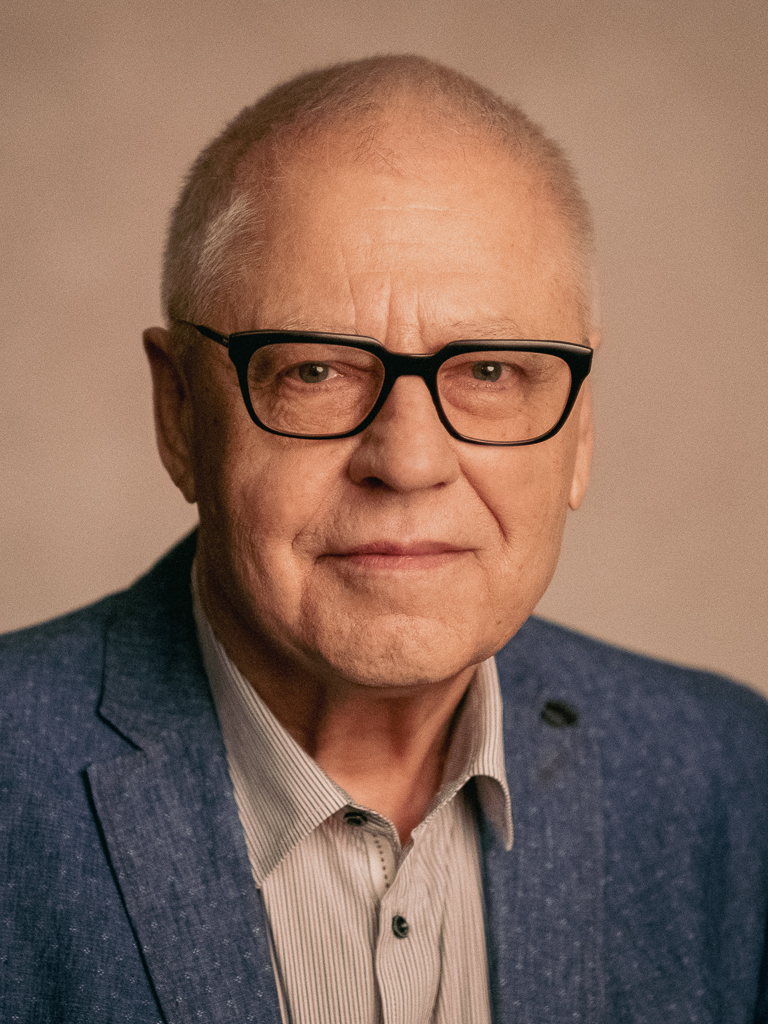
Krzysztof Torończyk. Fot. Marta Ankiersztejn
Phot. Marta Ankiersztejn / The Artistic Archive of the National Theatre in Warsaw

Torończyk began his professional career at MCSU in Lublin as an assistant in the Department of Organisation and Management Theory at the Institute of Production Economics (1972–1978).

Next, from 1978 to 1992, he served as deputy director at the Juliusz Osterwa State Theatre in Lublin.

In January 1995, he began working at the Grand Theatre / National Opera in Warsaw as deputy director for financial affairs. At the same time (from April 1995) he was plenipotentiary for the Minister of Culture and Art regarding the merger process and creating a cultural institution bearing the name THE NATIONAL THEATRE in Warsaw. From January 1996 to April 1998, he worked as managing director of the National Theatre, which at that time encompassed both the opera and theatre stages. He developed the administrative and financial structure and oversaw how work was organised amongst a team of approximately 1500 people. He conducted negotiations with sponsors, thus obtaining extra-budgetary funds, that allowed for the implementation of many artistic projects that were significant for international cultural exchange. 

Following the decision to separate the National Theatre into two distinct cultural institutions, the Grand Theatre / National Opera and the National Theatre, Torończyk organised the newly established National Theatre from the ground up in terms of structure, personnel, and economic and financial aspects to ensure it could function independently. From April 1998, he was appointed acting director, and then from September 1998, director of the National Theatre, a position he would hold until August 2025.

In 2000, at the request of the local authorities in the Lublin Province, he simultaneously assumed the position of general director of the Juliusz Osterwa Theatre in Lublin, and was tasked with restoring the artistic prestige of this renowned stage, its economic and financial condition, and ensuring the reconstruction of the theatre's historic building. He held the position until 2016.

Torończyk also helped to establish the Union of Polish Theatres and participated in drawing up documents regulating its activities, and for many years he was the vice-president of the organisation.

From 2003 to 2016, he lectured at the Aleksander Zelwerowicz Theatre Academy in the Directing Department; and from 2010 he also lectured at the Department of Theatre Studies in this same Warsaw institution.

Torończyk is a member of the Chapter of Distinguished Members of the Association of Polish Stage Artists. He was chairman of the Main Audit Commission during the presidencies of Kazimierz Dejmek (1988) and Andrzej Łapicki (1989–1990). He has been awarded the Silver and Gold Cross of Merit, the Knight's Cross of the Order of Polonia Restituta, and the Officer's Cross of the Order of Polonia Restituta. He has also been honoured by the Minister of Culture with the Silver Medal for Services to Culture, Gloria Artis, as well as with the "Meritorious for Polish Culture" badge.

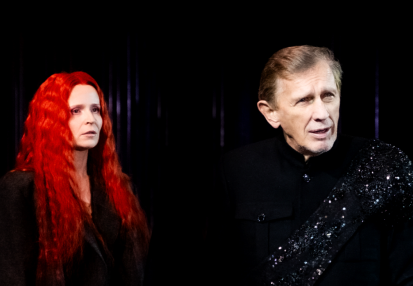
  • THE POLISH THERMOPYLAE

    In his first play at the National Theatre, director Jan Klata has opted for Tadeusz Miciński's The Polish Thermopylae

  • INFINITE JEST

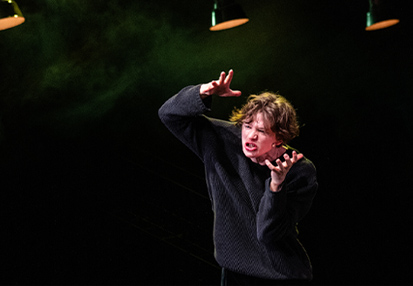
    Premiere staged by Kamil Białaszek. His work intersects with a legend of postmodernism, David Foster Wallace. 

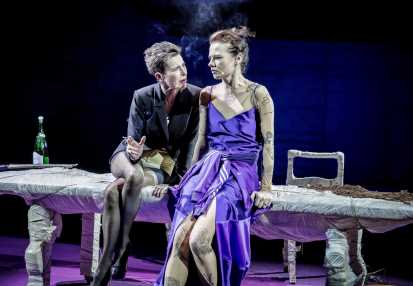
  • CHARLATANS

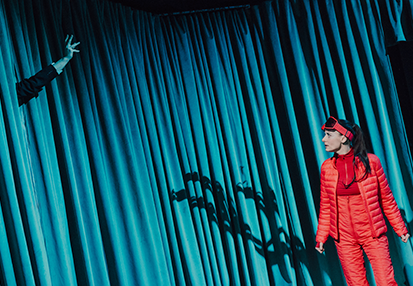
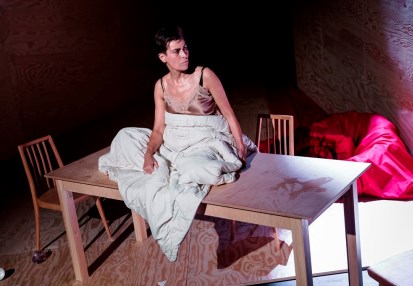
    “When I’m not acting, life is black and white,” says the heroine of Pablo Remón’s play. Charlatans directed by Grzegorz Małecki 

  • HAMLET

    Jan Englert crowns his twenty-eight seasons of artistic work at the National Theatre with a performance of Hamlet.

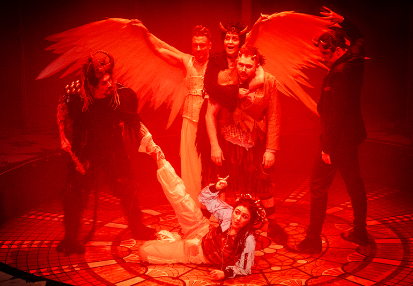
  • HEAVEN AND HELL

    Although Maria Wojtyszko's play touches upon the painful subject of losing loved ones, Jakub Krofta's deft staging provides light entertainment for the whole family. 

  • OTHER DELIGHTS

    This adaptation of the novel Other Delights is the second staging of one of Jerzy Pilch's works at the National Theatre, following The Holy Father's Skis.  

  • FAUST

    Faust is a story based on an ancient legend of a scholar who yearns so much for just a moment of happiness that he makes a pact with the devil. 

  • A DREAM PLAY

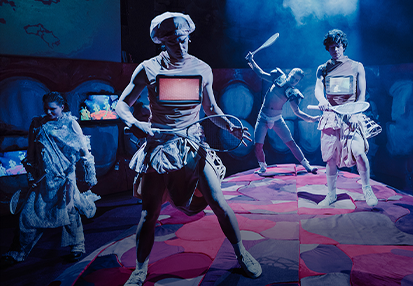
    After the well-received Alice's Adventures in Wonderland, Sławomir Narloch returned to the National Theatre with another premiere – A Dream Play by Strindberg.


  • KING LEAR

    King Lear may be Shakespeare's boldest examination of human nature. Jan Englert will play the title role in the National Theatre's production.

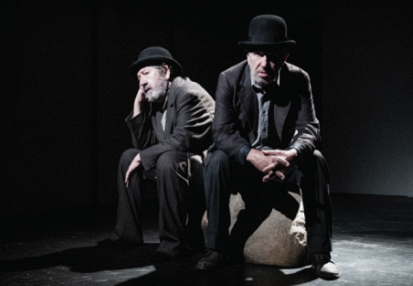
  • WAITING FOR GODOT

    "What do we do now? Wait. [...] We're waiting for Godot". Piotr Cieplak directs Waiting for Godot by Beckett. Is this a classic yet? Does it still have its avant-garde power?

  • FREDRO: THE JUBILEE YEAR

    To celebrate 230 years since Aleksander Fredro's birth, the National Theatre invites you to an evening dedicated to the life and works of Poland’s greatest comedy writer. 

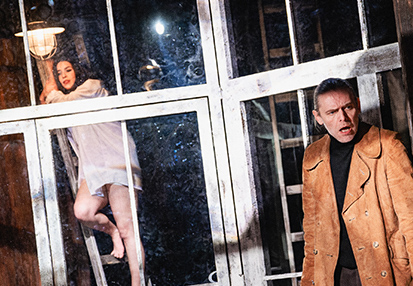
  • TALES FROM THE VIENNA WOODS

    Małgorzata Bogajewska directs for the second time at the National Theatre. This time she draws on Ödön von Horváth's 1931 drama.

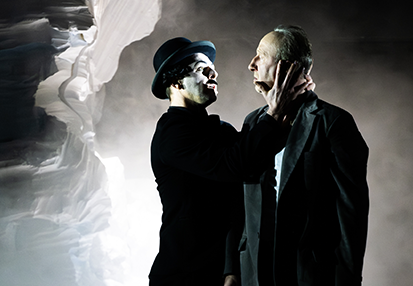
  • THE THEATRE MAKER

    The play by Thomas Bernhard, one of the most outstanding playwrights of the second half of the 20th century. In the title role – Jerzy Radziwiłowicz. 

  • ALICE'S WONDERLAND

    Have you ever quarreled with the Time or visited a forest where things have no names? Alice’s Wonderland is a musical performance based on the famous novel by Lewis Carroll. 

  • THE MISANTHROPE

    Jan Englert stages a classic play by Molière. What is Alcest's misanthropy: an uncompromising commitment to the truth or a doomed uprising against social conventions?

  • THE DECALOGUE

    A meditation upon the moral foundations of the present – an iconic work of Polish cinema, rethought thirty-five years after its creation by Krzysztof Kieślowski and Krzysztof Piesiewicz. 

  • MARY STUART

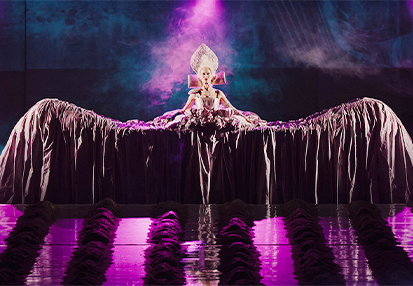
    Grzegorz Wiśniewski returns to the classic drama about human passions interwoven in a ruthless machinery of history and intrigue.

  • MÜNCHHAUSEN FOR ADULTS

    Baron von Münchhausen lived in the 18th century and told incredible stories about himself. Maciej Wojtyszko directs his own play about the famous adventurer and mystifier.

  • Solidarity with Ukraine | Солідарні з Україною

    The ensemble of the National Theatre stands in solidarity with the Ukrainians who are fighting for the independence of their homeland.

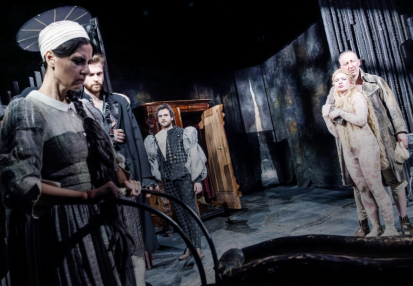
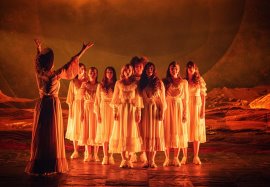
  • PICNIC AT HANGING ROCK

    1900. On a hot, stormy day, Mrs Appleyard's boarding school residents go on a picnic near Hanging Rock. The new theatrical version of the Australian prose classics. 

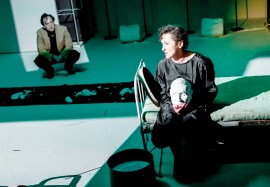
  • SNAKE SKIN

    Artur Urbański directs his own play which main character is Ruth Berlau, one of Bertolt Brecht's closest associates and life companions.

  • AUTUMN SONATA

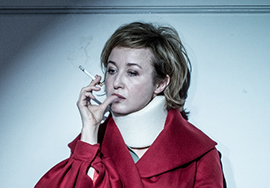
    A story about the need for love and acceptance, about an inherited emotional coldness, about the psychological costs of creativity. A theatrical version of a film script by Ingmar Bergman. 

  • MOTHER JOAN OF THE ANGELS

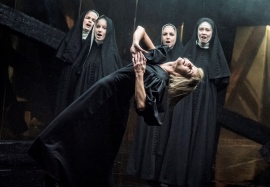
    A performance about the need to experience something that surpasses us. In the title role of the prioress – Małgorzata Kożuchowska. 

  • HOW TO BE LOVED

    This is the performance about love and moral responsibility for another person as well as the mechanisms controlling human memory. The dramatisation of the story by Kazimierz Brandys.


  • LUNGS

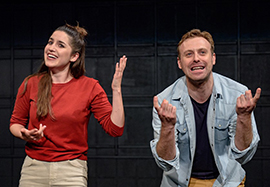
    Briliant, full of humour and touching love story of a young couple. Breakups and comebacks, passion and sex, the first important decisions and the search for meaning in a complex, modern world.


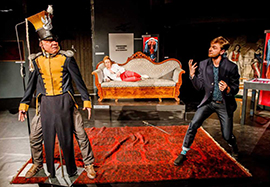
  • UHLANS

    The Museum of All-Time Polish Uhlans. Exhibits of the national exacerbation. A serious comedy in three acts about the entanglement in myths of Polishness. 


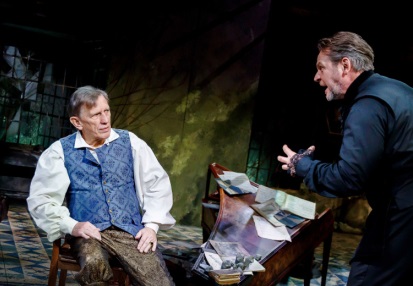
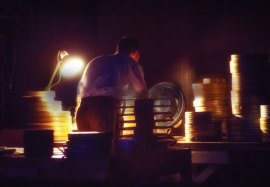
  • THE IMAGE MAKERS

    The truth about the essence of creation and responsibility in art. Director Viktor Sjöström is working on the film The Phantom Carriage, based on the novel by Nobel Prize winner Selma Lagerlöf. 

  • FOREFATHER'S EVE

    Mickiewicz's poetic drama interpreted by Lithuanian Master Eimuntas Nekrošius — theatre visionary known for his unique theatrical language.


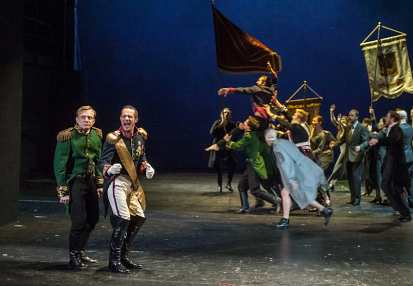
  • KORDIAN

    The Polish nation's tragic choice: to die heroically in the name of a noble idea or live a life "making shoes for dogs"? — the alternative presented to Kordian in two parables.

  • FLEA THE SWINDLER

    Tremendous fun and great laughs – not just for kids. The antics of the Flea are directed by Anna Seniuk with the music composed by Maciej Małecki.


By continuing to use this site, you consent to our use of cookies. You can adjust cookies settings via your internet browser. Review our cookies policy here.

You can adjust your cookies settings below:

  Allow storing advertising data.

  Allow storing user data.

  Allow personalized ads.

  Allow storing analytical data.